Annonces
La plupart des gens pensent que cultiver ses propres aliments ou plantes chez soi nécessite un jardin, des connaissances particulières ou des années d'expérience.
Rien de tout cela n'est vrai.
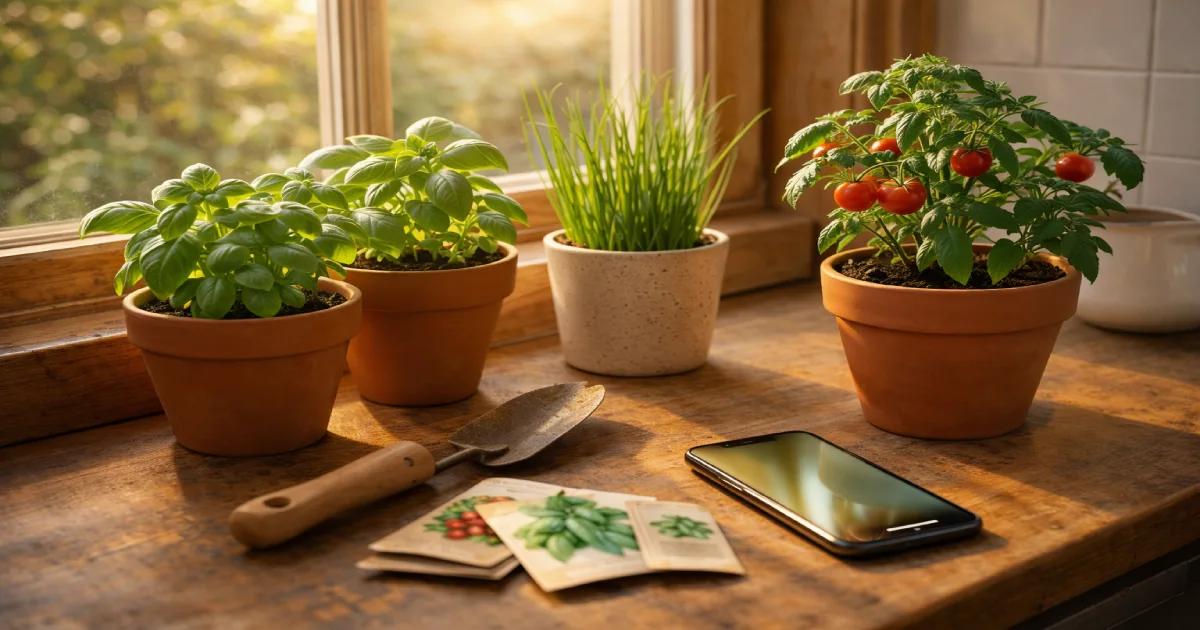
Un potager peut commencer avec un simple pot sur le rebord d'une fenêtre. Quelques graines et un peu d'attention chaque jour suffisent. À la portée de tous, des herbes fraîches cueillies directement dans votre cuisine, des légumes cultivés de vos propres mains, des fleurs qui égayent votre intérieur….
Ce guide vous montre exactement comment débuter, quoi cultiver, quelles applications facilitent le processus et comment éviter les erreurs qui bloquent la plupart des débutants avant même de voir leur première pousse.
Pourquoi cultiver ses propres légumes change tout
Cultiver ses propres plantes n'est pas qu'un simple passe-temps.
C'est l'une des choses les plus concrètes et gratifiantes que vous puissiez faire pour votre vie quotidienne.
Cultiver ses propres herbes aromatiques permet d'arrêter d'acheter des petits sachets en plastique au supermarché et de cueillir des feuilles fraîches directement dans un pot dont l'entretien ne coûte presque rien.
Cultiver ses propres légumes, c'est manger des aliments qui étaient vivants il y a quelques heures, et non il y a plusieurs semaines.
Cultiver ses propres fleurs, c'est remplir sa maison de quelque chose que l'on a soi-même créé.
Et quand quelque chose tourne mal, ce qui arrive parfois, on apprend quelque chose qu'aucun livre ne pourrait nous enseigner aussi efficacement que l'expérience elle-même.
Pourquoi chaque jardinier amateur a besoin de ces deux choses
- Cultivez chez vous des aliments frais et des herbes aromatiques pour une fraction du prix de l'achat.
- Pas besoin de jardin ni d'espace extérieur. Des pots, des rebords de fenêtre et des balcons suffisent.
- Identifiez instantanément n'importe quelle plante inconnue grâce à une application gratuite. Aucune connaissance en botanique n'est requise.
- Trouvez des graines pour toutes les plantes que vous souhaitez cultiver, livrées directement chez vous.
- Les semences à pollinisation libre peuvent être conservées et replantées chaque saison. Un seul achat pour une culture éternelle.
- Le jardinage à domicile réduit le stress, améliore la santé mentale et vous reconnecte à quelque chose de réel.
Par où commencer : choisir le bon espace
La première décision à prendre pour aménager un jardin potager est celle de l'emplacement des cultures.
La bonne nouvelle, c'est que presque tous les espaces de vie offrent au moins une option viable.
Un rebord de fenêtre ensoleillé qui reçoit quatre heures ou plus de lumière directe par jour suffit pour faire pousser des herbes aromatiques, de la laitue, des radis et de nombreuses plantes à fleurs.
Un balcon multiplie considérablement vos possibilités. Grâce à des contenants de différentes tailles, vous pouvez cultiver des tomates, des poivrons, des haricots, des fraises et une grande variété de fleurs sur un espace de quelques mètres carrés seulement.
Un petit coin de jardin extérieur, même une simple bande de terre le long d'un mur ou d'une clôture, offre des possibilités quasi illimitées pour les légumes, les arbustes fruitiers, les plantes grimpantes et les herbes vivaces.
Si vous avez des doutes sur l'éclairage de votre espace, plusieurs applications peuvent vous aider. Light Meter, disponible gratuitement sur iOS et Android, utilise l'appareil photo de votre téléphone pour mesurer l'intensité lumineuse réelle à n'importe quel endroit de votre maison et vous indique quelles plantes sont adaptées à ce niveau précis.
Le plus important est de commencer par l'espace dont vous disposez réellement, et non par celui que vous souhaiteriez avoir.
Que cultiver en premier : les meilleures plantes pour les débutants
Choisir les bonnes plantes pour votre premier jardin potager fait toute la différence entre une expérience qui renforce votre confiance et une expérience décourageante.
Commencez par des plantes robustes, à croissance rapide et immédiatement utiles.
Basilic Le basilic est l'une des herbes aromatiques les plus faciles et les plus gratifiantes à cultiver en intérieur. Il germe en cinq à sept jours, pousse rapidement dans un endroit chaud et ensoleillé, et on peut le récolter en continu en pinçant les feuilles supérieures. Un simple pot de basilic sur le rebord d'une fenêtre de cuisine produit plus que nécessaire pour la plupart des foyers.
Laitue et salades vertes Elles sont idéales pour les débutants car elles poussent vite, tolèrent mieux la mi-ombre que la plupart des légumes et peuvent être récoltées à plusieurs reprises. Un grand pot sur un balcon ou même une jardinière profonde sur le rebord d'une fenêtre suffit.
tomates cerises Elles sont plus tolérantes que les variétés de tomates plus grandes et produisent abondamment en pots. Choisissez des variétés compactes ou naines spécialement sélectionnées pour la culture en conteneur. Elles ont besoin d'un emplacement ensoleillé et d'un tuteur ou d'une petite cage pour les soutenir durant leur croissance.
Menthe Elle pousse vigoureusement dans presque toutes les conditions et demande peu d'entretien. Il est conseillé de la cultiver dans son propre pot, car elle s'étend rapidement et envahira tout contenant partagé avec une autre plante.
Radis Ce sont parmi les légumes les plus rapides à cultiver, de la graine à la récolte, souvent prêts en seulement trois à quatre semaines. Ils sont parfaits pour les jardiniers débutants car la rapidité des résultats renforce la confiance en soi et rend le processus vraiment gratifiant.
Tournesols Elles sont quasiment infaillibles et donnent des résultats spectaculaires avec un minimum d'effort. Une simple graine semée dans un grand pot donnera naissance à une plante remarquable qui mérite d'être observée chaque jour.
ciboulette Elles comptent parmi les herbes aromatiques les plus pratiques pour un potager. Elles poussent facilement dans un petit pot, repoussent rapidement après la coupe et s'accordent avec presque tous les plats salés.
Applications qui facilitent le jardinage à domicile
La technologie a transformé le jardinage domestique de manière significative pour les débutants.
Imaginez-le PictureThis est l'application de soin des plantes la plus complète du marché. En plus d'identifier les plantes que vous photographiez, elle propose des rappels d'arrosage personnalisés, des programmes de fertilisation et un diagnostic des maladies. Pour les débutants qui gèrent plusieurs plantes et essaient de se souvenir lesquelles ont besoin d'eau, PictureThis fait office d'assistant personnel. La version gratuite répond à la plupart des besoins.
PlantNet Cette application est entièrement gratuite et sans limites. Elle est particulièrement utile pour identifier les plantes que vous croisez en extérieur et que vous souhaitez cultiver chez vous. Pointez votre appareil photo vers n'importe quelle plante lors d'une promenade ou dans votre jardin, identifiez-la et utilisez son nom pour trouver des graines en ligne.
Greg Cette application dédiée à l'entretien des plantes suit chaque plante de votre maison, apprend à connaître votre environnement au fil du temps et vous envoie des rappels adaptés à la luminosité et au climat de votre logement. Elle est particulièrement appréciée des personnes vivant en appartement et possédant plusieurs plantes d'intérieur. Disponible gratuitement sur iOS et Android.
Jardinez est une application de journal de jardinage et de planification qui vous permet de suivre vos plantations : ce que vous avez planté, quand et comment cela a évolué. Elle est particulièrement utile pour les jardiniers qui sèment et souhaitent documenter leurs cultures. Disponible sur iOS et Android.
Lune et Jardin Cette application de calendrier de jardinage biodynamique indique les jours les plus propices pour planter, tailler, récolter et fertiliser en fonction des cycles lunaires. Bien que les principes scientifiques du jardinage biodynamique ne fassent pas l'unanimité, de nombreux jardiniers expérimentés ne jurent que par lui et il compte de nombreux adeptes à travers le monde. Disponible gratuitement sur iOS et Android.
Les erreurs les plus fréquentes des débutants et comment les éviter
La plupart des potagers familiaux échouent pour l'une des trois raisons suivantes.
arrosage excessif L'excès d'eau est la principale cause de mortalité des plantes chez les débutants. On meurt davantage d'un excès d'eau que d'un manque. La bonne méthode consiste à vérifier l'humidité du terreau avant d'arroser, plutôt que d'arroser à heures fixes. Enfoncez votre doigt de 2,5 cm dans la terre. Si elle est humide, attendez. Si elle est sèche, arrosez abondamment.
Mauvais placement de l'éclairage C'est le deuxième problème le plus fréquent. Une plante étiquetée comme ayant besoin de plein soleil, placée dans un coin ne recevant que deux heures de lumière indirecte par jour, aura du mal à survivre et finira par mourir. Avant d'acheter une plante, renseignez-vous sur ses besoins spécifiques en lumière et évaluez honnêtement la luminosité disponible à l'endroit choisi. En cas de doute, utilisez une application de mesure de la lumière.
Commencer avec trop de plantes à la fois Cela peut décourager les débutants et mener à la négligence. Commencez avec trois à cinq plantes. Apprenez à connaître leurs besoins spécifiques. Prenez confiance en vous. Agrandissez votre collection lorsque vous vous sentirez prêt.
Utilisation de sols de mauvaise qualité C'est une erreur facile à éviter. Un terreau générique d'une marque réputée convient à la plupart des plantes. Évitez d'utiliser de la terre du jardin pour la culture en pot, car elle se compacte et draine mal.
Abandonner après le premier échec C'est peut-être l'erreur la plus coûteuse. Tous les jardiniers perdent des plantes. Les jardiniers expérimentés en perdent régulièrement. Chaque échec vous apprend quelque chose de précis sur la plante, votre environnement ou vos habitudes d'arrosage. Considérez les échecs comme des informations, et non comme des défaites.
Foire aux questions
Ai-je besoin d'un espace extérieur pour créer un potager chez moi ?
Non. Un rebord de fenêtre ensoleillé recevant au moins quatre heures de lumière directe par jour suffit pour cultiver des herbes aromatiques, de la salade et de petites plantes à fleurs. Un balcon offre un choix beaucoup plus vaste. Un espace extérieur permet de cultiver une plus grande variété de plantes, mais n'est pas indispensable pour débuter.
Combien coûte la création d'un potager chez soi ?
Les frais de départ sont minimes. Quelques sachets de graines, un sac de terreau et deux ou trois pots simples représentent un investissement initial que la plupart des gens consacrent au prix d'un repas au restaurant. Les graines achetées auprès de spécialistes en ligne sont souvent moins chères à l'unité que celles des jardineries, et les variétés à pollinisation libre peuvent être conservées et replantées chaque saison sans frais supplémentaires.
Combien de temps avant de pouvoir récolter quelque chose ?
Les radis sont prêts en trois à quatre semaines. Les salades peuvent être récoltées dès quatre semaines après le semis. Le basilic et autres herbes aromatiques peuvent être cueillis légèrement quatre à six semaines après la germination. Les tomates cerises mettent généralement de huit à douze semaines entre la transplantation et la première récolte, selon la variété et les conditions de culture.
Est-il possible de cultiver des légumes à l'intérieur sans lumière directe du soleil ?
La plupart des plantes potagères ont besoin d'au moins quatre heures d'ensoleillement direct par jour pour une croissance optimale. Dans les espaces peu éclairés naturellement, les lampes horticoles LED sont devenues de plus en plus abordables et performantes. Disponibles en ligne à des prix très variés, ces lampes LED à spectre complet permettent de cultiver des légumes en intérieur dans presque tous les espaces.
Quelle est l'herbe aromatique la plus facile à cultiver chez soi ?
La menthe et la ciboulette sont sans conteste les herbes les plus faciles à cultiver pour les débutants. Elles tolèrent diverses conditions de luminosité, se remettent rapidement d'un manque d'entretien et repoussent vigoureusement après la coupe. Le basilic est légèrement plus exigeant en lumière, mais récompense les jardiniers débutants attentifs par une croissance rapide et abondante.
Puis-je identifier les plantes que j'ai déjà chez moi grâce à une application ?
Oui. Des applications comme PictureThis et PlantNet peuvent identifier n'importe quelle plante d'intérieur, de jardin ou aromatique à partir d'une simple photo. C'est particulièrement utile pour les plantes héritées lors d'un déménagement, les cadeaux reçus sans étiquette ou les plantes achetées sur les marchés sans indication de variété. Une fois identifiée, vous avez immédiatement accès à des guides d'entretien complets et spécifiques à cette variété.
Les informations contenues dans cet article sont fournies à titre informatif et éducatif. Les besoins en matière d'entretien des plantes varient selon le climat, les conditions locales et l'état de santé de chaque plante. Les recommandations d'applications sont basées sur leur disponibilité générale et les avis des utilisateurs. Vérifiez toujours que toute plante que vous envisagez de consommer ou d'utiliser à des fins médicinales est sans danger pour votre situation particulière. La réglementation relative à l'importation de semences varie selon les pays.